Overview
Furniture, chairs and other surfaces are not easily disinfected. Carpet is present.
Spills and accidents happen. When working with biological materials, it is important to have workspaces which can be easily cleaned and decontaminated. You will rarely find benchtops which are not made of chemical resistant material. Bench surfaces should be hard and non-porous. Note if benchtops are cracked, warped, or show some type of material defect as that may compromise ability to be cleaned/decontaminated.
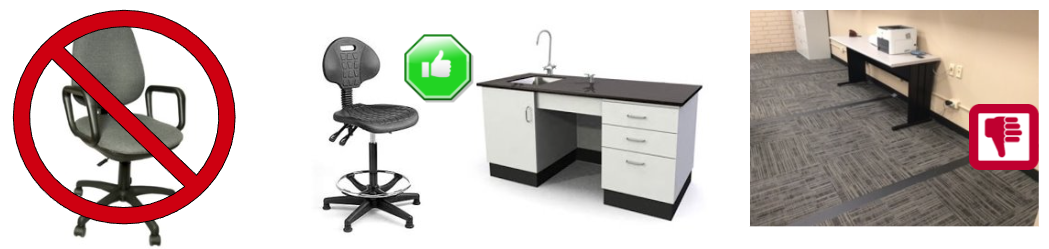
Chairs should be covered with non-porous material for the same reasons. If you find cloth-covered chairs, please make a note of the deficiency using this code. Acceptable options for cloth covered chairs include:
- Replacing the entire chair with an acceptable model/style;
- Having the cloth covering removed and replaced with a non-porous material.
- Cover the cloth chair with non-porous material, such as a trash bags, vinyl seat covers, etc. (this material must be secured to the chair).
Make sure all furniture in the lab is sturdy, including shelves and nothing appears “home-made” and flimsy. Should you find defects, you’ll cite it as you would with a standard laboratory audit.
Citations and Related Resources
BMBL 6th Ed. Section IV BSL-1 D-4 The laboratory is designed so that it can be easily cleaned. a. Carpets and rugs in laboratories are not appropriate. b. Spaces between benches, cabinets, and equipment are accessible for cleaning.
D-5. Laboratory furniture can support anticipated loads and uses. a. Benchtops are impervious to water and resistant to heat, organic solvents, acids, alkalis, and other chemicals. b. Chairs used in laboratory work are covered with a non-porous material that can be easily cleaned and decontaminated with appropriate disinfectant.